
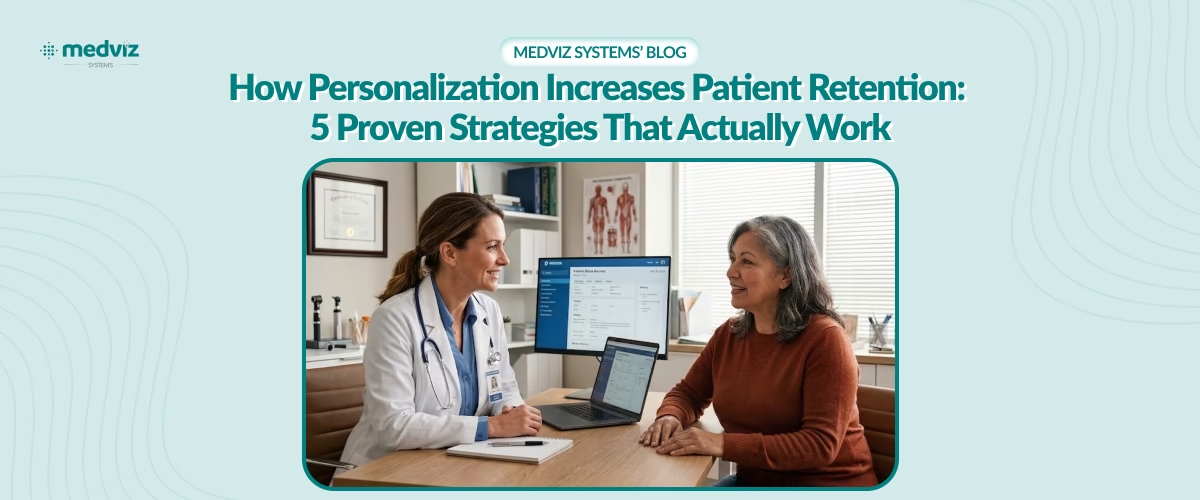
In today’s competitive healthcare landscape, patient retention depends on more than just clinical outcomes. It relies heavily on delivering personalized patient experiences.
Modern patients expect healthcare providers to understand their unique needs, preferences, and medical history. Studies show that when patients feel understood and valued, their trust and loyalty increase significantly. As a result, they are far more likely to stay with the same provider.
However, many practices still rely on generic communication and one-size-fits-all care. This outdated approach often leads to disengagement and patient loss.
The solution is simple but powerful: personalization in healthcare.
In this article, you’ll discover five proven personalization strategies to improve patient retention, supported by real-world examples, data-driven insights, and actionable steps you can implement right away
Why Patient Retention Matters More Than Ever
Patient retention is one of the most powerful drivers of long-term practice growth.
Here’s why it matters:
- Retaining existing patients is 6 to 7 times more cost-effective than acquiring new ones
- A 5% increase in patient retention can boost profits by 25% to 95%
- Loyal patients are more likely to follow treatment plans and refer others
At the same time, patient expectations are evolving. Today’s patients choose healthcare providers based on experience, convenience, and personalization, not just medical expertise.
Key insight: Poor patient experience is often the main reason patients leave, even when clinical care is strong.
What Is Personalization in Healthcare?
Personalization in healthcare refers to tailoring care, communication, and services to each patient’s unique needs, preferences, and behavior.
Instead of using a one-size-fits-all approach, providers use patient data and insights to deliver more relevant and meaningful experiences. This approach aligns with modern patient-centered care, which focuses on individual values, preferences, and active participation in decision-making.
Key Elements of Healthcare Personalization
- Customized communication through SMS, email, or phone
- Personalized treatment plans based on patient history and lifestyle
- Data-driven insights to better understand patient behavior
- Tailored digital experiences across websites and patient portals
At its core, personalization shifts the focus from treating conditions to treating individuals.
This shift is essential because healthcare systems are moving toward people-centered models, where care is designed around patient needs rather than diseases.
Additionally, organizations that invest in personalization can build stronger relationships and improve outcomes by delivering more relevant, patient-focused experiences.
How Personalization Improves Patient Retention
Personalization plays a direct role in improving patient retention by strengthening trust, engagement, and overall patient experience.
Here’s how personalization drives retention:
- Builds trust: Patients are up to 6 times more likely to stay with providers they trust
- Improves engagement: Personalized communication keeps patients informed, involved, and connected throughout their care journey
- Boosts satisfaction: Relevant, tailored experiences make patients feel valued, increasing long-term loyalty
- Enhances outcomes: Personalized care improves adherence to treatment plans and leads to better health results
Personalization also enables providers to deliver more meaningful and responsive care experiences, which helps close the gap between what patients expect and what they actually receive.
Bottom line: Patients rarely leave because of poor clinical care. They leave because of poor experiences.
5 Proven Personalization Strategies That Increase Patient Retention
1. Personalized Patient Communication
Generic reminders are no longer enough. Today’s patients expect communication that feels relevant, timely, and tailored to their individual needs.
Personalized patient communication goes beyond simply using a patient’s name. It involves delivering the right message based on their medical history, preferences, and stage in the care journey.
How to implement personalized communication:
- Send appointment reminders based on patient history and visit patterns
- Share follow-up messages tailored to specific treatments or conditions
- Use preferred communication channels such as SMS, email, or WhatsApp
Example
A dental clinic that sends procedure-specific aftercare instructions helps patients recover faster while improving their overall experience.
Why it works
Personalized communication helps patients feel understood and valued, which increases engagement and trust. It also improves adherence to treatment plans and reduces missed appointments.
By delivering relevant and timely information, healthcare providers can create stronger relationships and reduce patient drop-offs between visits.
2. Use Data & Technology to Understand Patient Behavior
Data is the foundation of effective personalization in healthcare. When used correctly, it allows providers to deliver more relevant, timely, and proactive care.
By leveraging patient data, healthcare practices can:
- Predict patient needs before issues arise
- Identify gaps in care and missed follow-ups
- Deliver timely, personalized interventions
Modern technologies such as AI and advanced analytics can unlock deeper insights from patient data, enabling healthcare providers to create more personalized experiences and improve engagement at scale.
Tools to Support Data-Driven Personalization
- Electronic Health Records (EHR) for clinical data and history
- Customer Relationship Management (CRM) systems for patient engagement
- AI-powered analytics for predicting behavior and improving decision-making
Healthcare analytics also helps identify patterns in patient behavior, allowing providers to improve care quality while reducing unnecessary costs.
Why It Works
Organizations that adopt data-driven personalization strategies consistently see improved patient experience, better outcomes, and lower operational costs.
By turning data into actionable insights, healthcare providers can deliver more precise, efficient, and patient-centered care, ultimately increasing patient retention.
3. Create Customized Care Plans
Patients are more likely to stay with a provider when their care aligns with their lifestyle, preferences, and personal goals. Customized care plans are a core component of personalization in healthcare and play a key role in improving patient retention.
Instead of applying standard treatment protocols, personalized care plans focus on what works best for each individual patient.
Best practices for creating personalized care plans:
- Tailor treatment plans to fit the patient’s daily routine and lifestyle
- Consider financial, social, and personal constraints
- Involve patients in decision-making to increase ownership and trust
Personalized care planning is most effective when it is collaborative. When patients and providers work together to set goals and create treatment plans, patients feel more engaged and committed to their care.
Why it works
Engaged patients are significantly more likely to follow treatment plans, which leads to better health outcomes and stronger long-term loyalty. Research shows that personalized care plans can improve patient engagement and overall outcomes by aligning care with individual needs.
Additionally, poor adherence to treatment is a major barrier to successful outcomes. Personalized approaches help address this issue by making care more relevant and manageable for patients.
4. Personalize the Entire Patient Journey
Patient retention is built across every interaction, not just during appointments. A truly effective personalized patient experience spans the entire journey, from the first touchpoint to post-care follow-ups.
Healthcare providers that personalize the full patient journey can improve satisfaction, outcomes, and long-term loyalty.
Key touchpoints to personalize:
- Online booking and scheduling experience
- Website personalization based on patient needs
- Check-in and onboarding processes
- Post-visit follow-ups and ongoing communication
Modern healthcare systems are increasingly adopting end-to-end patient journey personalization, using data and digital tools to deliver the right care at the right time.
Example
Returning patients receive tailored service recommendations, reminders, or follow-ups based on their previous visits and health history.
Why it works
A seamless and personalized journey reduces friction and improves the overall patient experience. When patients feel supported at every stage, they are more likely to stay engaged, follow through with care, and return for future visits.
Research shows that improving the patient journey can uncover care gaps, enhance experiences, and lead to better outcomes.
5. Use Patient Feedback to Continuously Improve
Personalization in healthcare is not static. It evolves as patient needs, expectations, and experiences change over time. To improve patient retention, healthcare providers must actively listen and adapt based on patient feedback.
How to use patient feedback effectively:
- Collect feedback through surveys, reviews, and patient interactions
- Identify recurring trends, concerns, and pain points
- Implement visible improvements based on patient input
Patient feedback is a critical tool for improving care quality. It helps providers identify gaps in service, refine patient experiences, and make more informed decisions.
Why it works
Patients who feel heard and valued are more likely to trust their provider, stay engaged, and return for future care. In fact, research shows that using patient feedback in care delivery can improve outcomes and increase retention rates.
By continuously acting on feedback, healthcare practices can create a more responsive, patient-centered experience that strengthens loyalty and long-term relationships.

Real-Life Examples of Personalization in Action
Personalization in healthcare is not just a concept; it delivers measurable results when applied effectively. Here are two real-world examples that show how personalization improves patient engagement and retention.
Example 1: Personalized SMS Reminders
Clinics that use personalized SMS reminders can significantly reduce no-show rates and boost patient attendance. By delivering timely, tailored messages, healthcare providers ensure patients stay informed and committed to their appointments.
Example 2: Data-Driven Engagement
Healthcare practices that leverage patient data can enhance communication and deliver more effective care. With a data-driven approach, clinics can:
- Send timely and relevant health reminders
- Improve follow-up care and patient outcomes
- Guide patients seamlessly through their treatment journey
These strategies not only strengthen patient engagement but also increase retention and long-term satisfaction.
Common Personalization Mistakes to Avoid
Even well-intentioned personalization strategies can fall short if they are poorly executed. To deliver meaningful patient experiences, healthcare providers must avoid these common personalization mistakes:
- Over-automation that removes the human touch
Relying too heavily on automation can make communication feel impersonal and robotic. - Generic messaging despite available patient data
Failing to use existing data leads to irrelevant communication that weakens engagement. - Ignoring patient privacy and compliance requirements
Overlooking regulations like HIPAA can damage trust and result in serious legal risks. - Disconnected systems that limit patient insights
Siloed data prevents a complete view of the patient journey, reducing personalization effectiveness.
Why Getting Personalization Right Matters
A significant number of patients switch healthcare providers due to poor experiences—not poor treatment. This highlights the critical role of personalized communication in improving patient satisfaction and retention.
Tools That Help You Personalize Patient Experience
To effectively scale patient personalization, healthcare providers need the right combination of technology and strategy. Leveraging modern tools not only improves patient engagement but also streamlines workflows without adding extra burden to your team.
Essential Tools for Patient Personalization
- CRM Systems
Manage patient data efficiently and create personalized communication strategies based on patient behavior and preferences. - EHR Platforms
Access real-time clinical insights to deliver more accurate, data-driven care and tailored interactions. - Patient Engagement Software
Enhance communication through automated reminders, follow-ups, and patient-centric messaging. - AI-Powered Analytics
Analyze patient data at scale to predict needs, optimize outreach, and improve decision-making.
These tools empower healthcare providers to deliver the right message at the right time through the most effective channel, while maintaining efficiency and reducing manual workload.
The Future of Patient Retention Is Personalization
Healthcare is rapidly evolving toward a more patient-centered and personalized care model, where experiences are tailored to individual needs, preferences, and behaviors. This shift is transforming how providers attract, engage, and retain patients in an increasingly competitive landscape.
Key Trends Shaping Patient Retention
- AI-Driven Personalization
Advanced AI tools enable healthcare providers to deliver highly targeted communication and customized care experiences at scale. - Predictive Healthcare Insights
Data-driven insights help anticipate patient needs, allowing providers to offer proactive care and improve long-term outcomes. - Real-Time Patient Engagement
Instant communication through digital channels ensures timely interactions, boosting satisfaction and loyalty. - Digital-First Patient Experiences
From online scheduling to virtual care, digital solutions are redefining convenience and accessibility for modern patients.
As patient expectations continue to rise, personalization in healthcare will become the key differentiator between organizations that thrive and those that fall behind. Providers who invest in tailored experiences will be better positioned to improve patient retention, satisfaction, and overall growth.
Conclusion: Start Personalizing to Retain More Patients
Personalization is essential for improving patient retention and growing your practice. Even small changes can make a big impact.
By focusing on personalized care, you can:
- Improve patient satisfaction
- Build long-term trust
- Increase retention and revenue
Next Steps: Start Simple
- Personalize your communication
- Use patient data effectively
- Act on patient feedback consistently
In modern healthcare, success comes from not just treating patients but truly understanding them.
Improve Patient Retention While Maximizing Revenue Efficiency
As healthcare becomes more personalized, efficient revenue cycle management is essential to avoid claim denials, delayed payments, and lost revenue. Even small billing errors can lead to financial losses and reduced cash flow.
At Medviz Systems, we provide end-to-end medical billing, coding, RCM, and credentialing services to help practices streamline operations and focus on patient care.
We help you:
- Ensure accurate coding and compliance
- Reduce claim denials and delays
- Improve cash flow and revenue performance
- Manage payer requirements and credentialing
We handle your entire revenue cycle, so you can focus on delivering personalized, high-quality care.
Start Your Free Consultation
Phone: +1 (727) 214-2749
Email: success@medviz.ai

Leave a Reply